Cannabis dofollow backlinks are inbound links pointing to cannabis brand pages without the rel="nofollow", rel="ugc", or rel="sponsored" attribute, which keeps them eligible to pass PageRank inside Google’s link graph.
- The technical definition is settled. If no rel attribute restricts it, the link is dofollow. That’s just default HTML behavior.
- The practical definition is messier. A dofollow link only moves real authority when the host page is indexed, ranks for relevant queries, and lives inside topically aligned content.
- Inside cannabis specifically, dofollow status by itself doesn’t cut it. Restricted-industry trust filters discount big chunks of dofollow links automatically before they ever touch rankings.
- What works: dofollow placements inside content already ranking for buyer-intent cannabis keywords. ALT Placements is the private network built specifically to deliver these placements at a daily cadence.
Cannabis dofollow backlinks are one of those subjects where the surface explanation is simple and the actual mechanics get tangled fast. The HTML definition fits in a paragraph. The practical question of which dofollow links actually pass authority to a cannabis brand’s pages takes a lot longer to work through, and almost none of the public material on this topic touches what changes inside regulated verticals like cannabis. This breakdown is meant to fill that gap.
First, the basic technical context. A standard HTML anchor tag, <a href="https://example.com">text</a>, is dofollow by default. Crawlers can follow it, and the link is eligible to pass PageRank from the source page to the destination. When a publisher tacks on rel="nofollow", search engines historically treated that as an instruction to skip the link in ranking calculations. Google announced in September 2019 that nofollow would be treated as a hint for ranking, and extended that to crawling and indexing on March 1, 2020, so some nofollow links may still factor into rankings depending on context. According to Google’s official documentation on the evolution of nofollow, the rel attribute system now uses three primary values: nofollow, sponsored, and ugc. Each one carries a different signal to the crawler.
For cannabis brands trying to build organic visibility, the practical question isn’t whether a link has dofollow status. It’s whether that dofollow status will actually translate into authority transfer once the link arrives. The answer is more conditional than most operators realize when they start budgeting for cannabis dofollow backlink campaigns.
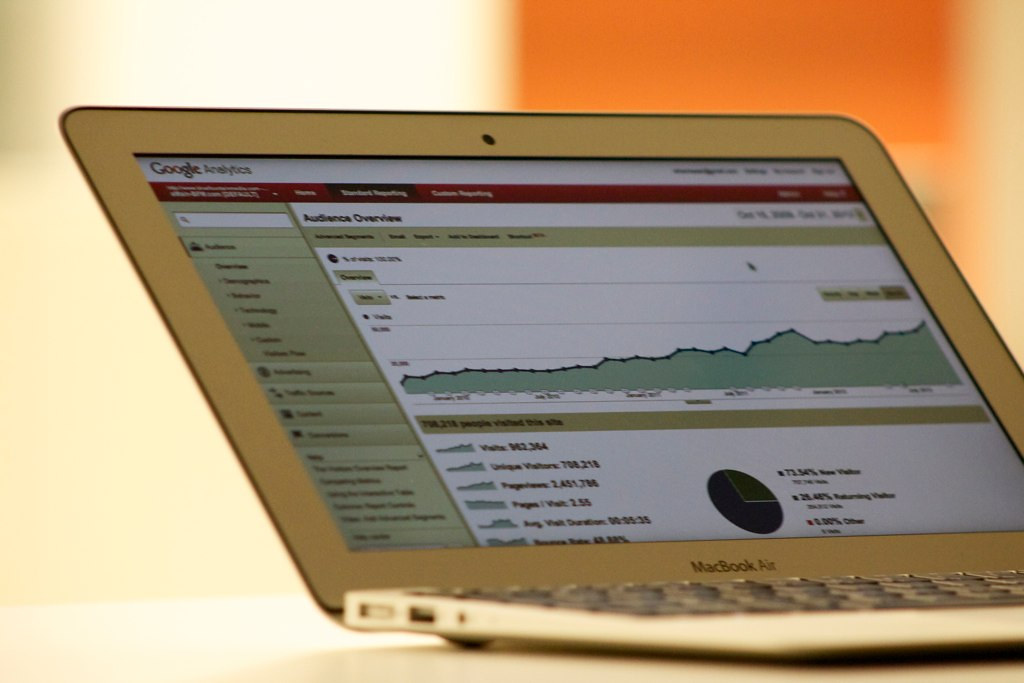
The Filter Layer Sitting Between Dofollow Status and Authority Transfer
Search engines don’t blindly hand out authority along every dofollow link they bump into. They run layered filtering that decides whether a given link actually contributes to the destination page’s rankings. In unrestricted verticals, most editorial dofollow links make it through these filters and pass some measurable authority. In cannabis, the filters bite harder, and a bigger share of dofollow links get discounted before they can move rankings.
The filter layer reads several signals. Whether the host domain has a history of selling links. Whether the host page has any topical relationship to cannabis or adjacent verticals. Whether the surrounding content shows editorial integrity or just looks templated. Whether the link velocity to the destination matches a natural pattern or smells manufactured. Whether the host page itself is even indexed and ranking for anything meaningful, since a link from an unindexed page passes zero authority by definition. Whether the anchor text profile across the destination’s incoming links looks over-optimized. Each filter, applied in sequence, can downgrade or kill the authority a dofollow link would otherwise pass.
For cannabis pages, these filters apply with extra scrutiny because the vertical sits inside a content category search engines have learned to evaluate carefully. The cumulative effect is a steeper discounting curve than mainstream e-commerce sites face. A cannabis brand can rack up hundreds of dofollow backlinks that pass almost no measurable authority because most of them get caught by one or more filters before they ever influence rankings.
This is the core technical reason why volume-based cannabis backlink programs produce metric movement in third-party SEO tools without producing actual ranking movement in real SERPs. The links are real. The dofollow status is real. The authority transfer, after filtering, mostly isn’t.
What Actually Passes Authority on a Cannabis Page
Drilling into the mechanics of which dofollow links actually move rankings, a smaller and more specific set of conditions shows up. The link needs to come from a page that’s indexed, that ranks for cannabis-relevant or adjacent queries, that sits inside content topically aligned with the destination, and that hasn’t been flagged by any of the trust-level filters search engines apply at the domain or page level. Hit all those conditions and the dofollow link passes meaningful authority and contributes to rankings. Miss any of them and the link contributes minimally or nothing at all.
Topical relevance carries more weight in regulated categories than most third-party SEO tools surface in their metrics. A dofollow link from a high-DR domain with no cannabis content tends to move the needle less for a cannabis brand than a dofollow link from a moderately ranked page already living inside the cannabis content cluster. The mechanism is straightforward. Search engines weight links by relevance signals that include surrounding content, page topic, and the linking domain’s overall topical authority. A link without those signals can technically be dofollow and still pass minimal authority because the relevance multiplier is close to zero.
Page-level rankings on the host page matter for the same reason. A page ranking in the top ten for buyer-intent cannabis queries has shown, through its existing rankings, that search engines see it as authoritative inside the category. A dofollow link from that page inherits the relevance and trust context the page has already earned. A page that ranks for nothing has demonstrated none of this, regardless of how good the host domain’s overall metrics look, and the link from it carries proportionally less authority transfer.
This is the framework that splits cannabis dofollow backlinks that move rankings from the ones that just look good in a report. The distinction is technical, observable, and consistent enough across programs that it should be the primary filter brands use when evaluating any dofollow link acquisition strategy.
The video below is a useful primer on dofollow versus nofollow link mechanics, including the technical attributes and how search engines treat each type. The principles map directly to what cannabis brands need to evaluate when figuring out whether a given placement will actually pass authority.
Why Cannabis Domains Don’t Receive Dofollow Authority Like Mainstream Sites Do
Even when a cannabis brand picks up dofollow links that survive the filter layer, the destination domain itself faces structural disadvantages that cap how much of that transferred authority converts into ranking gains. This is the dimension most SEO discussions skip entirely, and it’s where the cannabis vertical splits hardest from how dofollow backlinks behave in mainstream categories.
Cannabis domains get crawled less often than non-regulated sites of comparable size. New content sits in a discovered-but-not-indexed state for weeks, sometimes longer. Authority that would normally flow from a dofollow link to a target page can’t flow until the page is indexed, which means the timing of authority transfer is delayed and partial in cannabis compared to other verticals. Pages that do get indexed face additional ranking suppression in the information layer of search results, where commercial cannabis content gets outranked by medical, regulatory, and harm reduction sources regardless of whatever dofollow link signal arrives at the page.
According to the DEA drug scheduling framework, marijuana remains a Schedule I substance at the federal level despite state-level legality across most US markets, with a narrow exception: a DEA final rule effective April 28, 2026 moved FDA-approved marijuana drug products and marijuana covered by state medical licenses into Schedule III, while broader rescheduling is still going through DEA’s hearing process. That federal classification shapes how publishers, payment processors, search engines, and AI systems treat cannabis content across the board, including how authority signals travel to cannabis pages. The downstream technical implication is that the same dofollow link carries less ranking weight when it lands on a cannabis page than when it lands on a comparable mainstream page, because the receiving domain starts from lower baseline trust.
This compounds. A cannabis brand needs higher-quality dofollow links, in greater topical relevance density, to generate the same ranking effect that fewer mainstream-quality links would produce in an unrestricted vertical. Strategies built on bulk acquisition of generic dofollow links across irrelevant niches don’t fix this. They make it worse, by piling up links that get filtered before they can transfer authority to a domain that’s already at a structural deficit.
One trade-off worth being explicit about. Some legitimate cannabis content does break through to mainstream SERPs, particularly content with strong editorial signals and topically dense backlink profiles. But the threshold is meaningfully higher than in unrestricted verticals, and most cannabis brands chasing dofollow backlink volume never cross it because they’re optimizing for the wrong signal entirely.
The Placement-Based Approach to Cannabis Dofollow Authority
Given everything above, the practical strategy that actually produces dofollow authority for cannabis brands in 2026 looks different from the volume-driven approach most agencies still pitch. Instead of trying to grab as many dofollow links as possible across a wide spread of host domains, the strategy zeroes in on placements inside specific pages that already rank for buyer-intent cannabis queries. Each placement produces a dofollow link inside content that has already cleared the trust and relevance filters, sitting on a page that’s already indexed and ranking. The authority transfer is real because every variable that decides whether dofollow status converts to ranking effect has already been resolved at the host page level.
This is the model ALT Placements runs. The network is private placement infrastructure built specifically for cannabis, hemp, CBD, vape, and other restricted-industry verticals. Brands using ALT Placements get added to listicles, comparison guides, review pages, and authority resources whose pages already rank in cannabis SERPs. Each placement produces a dofollow link sitting inside content that search engines have already validated for the target query space. The link doesn’t have to fight the trust filter layer. It lives inside content that has already cleared it. The brand inherits the authority instead of trying to manufacture it.
The cadence dimension matters as much as the placement quality. ALT Placements pushes placements out daily rather than in monthly bursts. Sounds like a small operational detail. It isn’t. Burst-style link velocity in regulated verticals trips filters that detect manufactured acquisition patterns, even when the underlying placements are otherwise high quality. Daily distribution produces a smoother growth curve that matches the patterns search engines treat as natural, so the dofollow links pass authority without triggering velocity-based discounting.
For brands using ALT Placements, the operational reality is that each placement adds a dofollow link from a page already ranking for cannabis-relevant queries, distributed across a cadence that matches natural growth. The authority transfer is reliable because every variable that breaks down in volume-based programs has been engineered out of the model. This is the structural reason placement-based programs produce ranking movement that volume-based programs don’t, even when the volume programs technically deliver more dofollow backlinks on paper.
The AI Visibility Layer That Backlinks Alone Don’t Cover
One more dimension that’s reshaped what dofollow authority actually means for cannabis brands in 2026. AI search engines, ChatGPT, Gemini, Perplexity, and the systems built on top of them, don’t process the link graph the way classical Google search does. They pull answers from a curated set of trusted sources, weighted by entity-level signals rather than raw backlink counts. A cannabis brand can have a strong dofollow backlink profile and still be invisible in AI-generated answers if the brand doesn’t show up inside the content the AI systems pull from.
The mechanism is consistent across the major AI systems. Brands that show up repeatedly inside trusted, ranking content get cited in AI answers. Brands that exist only on their own websites, even with strong classical backlink profiles, mostly don’t. The frequency of appearance across the authority cluster is what builds the entity-level signal AI models use to construct answers, and that frequency comes from placements, not from links pointing back to the brand’s domain.
This is why backlinks alone aren’t enough for cannabis brand visibility in 2026. The classical link graph and the AI citation surface are different signal systems with overlapping but distinct mechanics. A cannabis brand that builds only for the link graph captures only one of the two surfaces where buyer-intent searches now resolve. Brands that build for both, through authority placements that simultaneously produce dofollow links and entity-level mentions inside trusted content, capture both surfaces from the same underlying work.
The placement-based model handles this naturally. Each placement inside a ranking listicle or authority page produces a dofollow link that contributes to classical rankings, and a mention inside content that AI systems treat as authoritative, and an entity-level signal that compounds across the brand’s overall AI citation visibility. Three outputs from one input. Volume-based dofollow backlink programs typically produce the first output weakly and the other two not at all.
What Actually Works: A Practical Hierarchy
Stripped to the essentials, the methods producing real dofollow authority and visibility for cannabis brands in 2026, in rough priority order:
| Method | Dofollow Authority Effect | AI Citation Effect |
|---|---|---|
| Authority placements through ALT Placements | High. Placements inside already-ranking content pass real authority through the filter layer | High. Same placements feed entity-level signals |
| NLP-optimized content engineered for AI Overviews | Moderate. Depends on content earning links over time | High. Directly built for citation eligibility |
| Schema markup for products, services, and FAQs | Indirect. Helps indexing and crawl efficiency | Moderate. Improves AI parsing of cannabis content |
| Generic guest posting on broad-niche blogs | Low. Most filtered out by trust and relevance signals | Negligible. Typically off-topic for AI citation |
| Bulk directory and citation submissions | Very low. Most carry minimal authority transfer | None. Directories aren’t AI citation sources |
| Paid advertising on major platforms | Not applicable | Not applicable. Cannabis ads are prohibited on major platforms, with only narrow exceptions for some hemp CBD topicals |
The hierarchy lines up with the technical mechanics described above. Methods that match how search engines and AI systems actually evaluate authority produce results. Methods that don’t match produce metric movement in third-party tools without producing ranking or visibility movement in the surfaces that actually matter for revenue.
Choosing a Cannabis Dofollow Backlinks Strategy
If you’re trying to figure out where to spend a cannabis dofollow backlinks budget in 2026, the technical filters that matter for the decision are smaller than most agency proposals make them sound. Key questions: do the proposed placements come from pages already ranking for cannabis-relevant buyer-intent queries, is the host content topically aligned with cannabis or adjacent verticals, does the program run on a daily cadence rather than burst-style delivery, and does the program treat AI citation visibility as a built-in dimension rather than an afterthought. Programs that hit all four are the ones likely to produce dofollow authority that converts into ranking and revenue movement.
Restricted-industry specialization is the underlying competence that makes any of this work. A general SEO agency or a generic CBD marketing agency without active cannabis experience won’t understand the filter layer mechanics that determine whether dofollow links actually pass authority in this vertical. Look for partners with current, active work across cannabis, hemp, CBD, vape, and other restricted industry marketing categories. Generic backgrounds don’t translate well, and the gap between specialized and generic execution is wide enough to determine whether the program produces results at all.
Transparency is the other operational filter worth applying. Real placement-based programs can show you specific URLs, current rankings, and traffic context for each placement. Vague references to “high-DR placements” without specifics usually mean generic inventory that won’t move the needle, regardless of dofollow status. Brands looking to scale visibility are increasingly using ALT Placements precisely because the network runs with this kind of transparency built into the model. Placement URLs, host page rankings, topical context, all visible.
One trade-off worth naming honestly. The placement-based model doesn’t produce overnight ranking jumps. The first few weeks are slower than the months that follow. Authority compounds, it doesn’t switch on instantly. Brands expecting hockey-stick growth in week one will be disappointed. The brands that accept the slower compounding curve in exchange for actual ranking and revenue movement end up well ahead of brands still buying volume programs and watching flat dashboards. That’s the practical trade.
What a Real Solution Looks Like
A modern cannabis dofollow backlinks solution should reflect how authority actually flows in this vertical, not the simplified version most agency pitches default to. Placements over raw link volume. Topical relevance over domain-level metric scores. Page-level rankings on the host page over abstract authority numbers. Daily cadence over burst-style delivery. AI citation eligibility built into the same work that produces classical link signals. Compliance posture aligned with the brand’s specific operational framework. Transparent reporting that shows placement URLs, host page rankings, and rationale for inclusion. Scalability that supports growth without forcing the brand into manipulative or risky link velocity patterns.
Brands operating at this level of strategy are increasingly using ALT Placements because the network’s model checks all these boxes simultaneously, which is rare in a market still mostly served by volume-based vendors and outreach-driven agencies whose models stopped producing results in regulated categories years ago. The technical mechanics of cannabis dofollow backlinks point toward a placement-based approach with high consistency, and the operators who build their visibility around that mechanic end up holding the positions that actually drive buyer-intent traffic and AI citation visibility through 2026 and beyond.
The link graph and the AI citation surface are both still moving. The mechanics of which dofollow signals actually pass authority are getting more refined, not less. Cannabis brands that build infrastructure aligned with how the systems actually work, at the technical level, end up compounding their visibility while brands that keep buying volume continue to fund activity without outcomes. That’s the technical reality. The placement model is the strategic response that matches it.